Beyond the Heat: The Gill-Kishan Partnership Redefines India’s 2027 ODI Blueprint
Shubman Gill-Ishan Kishan stand offers a glimpse into India's 2027 ODI WC blueprint
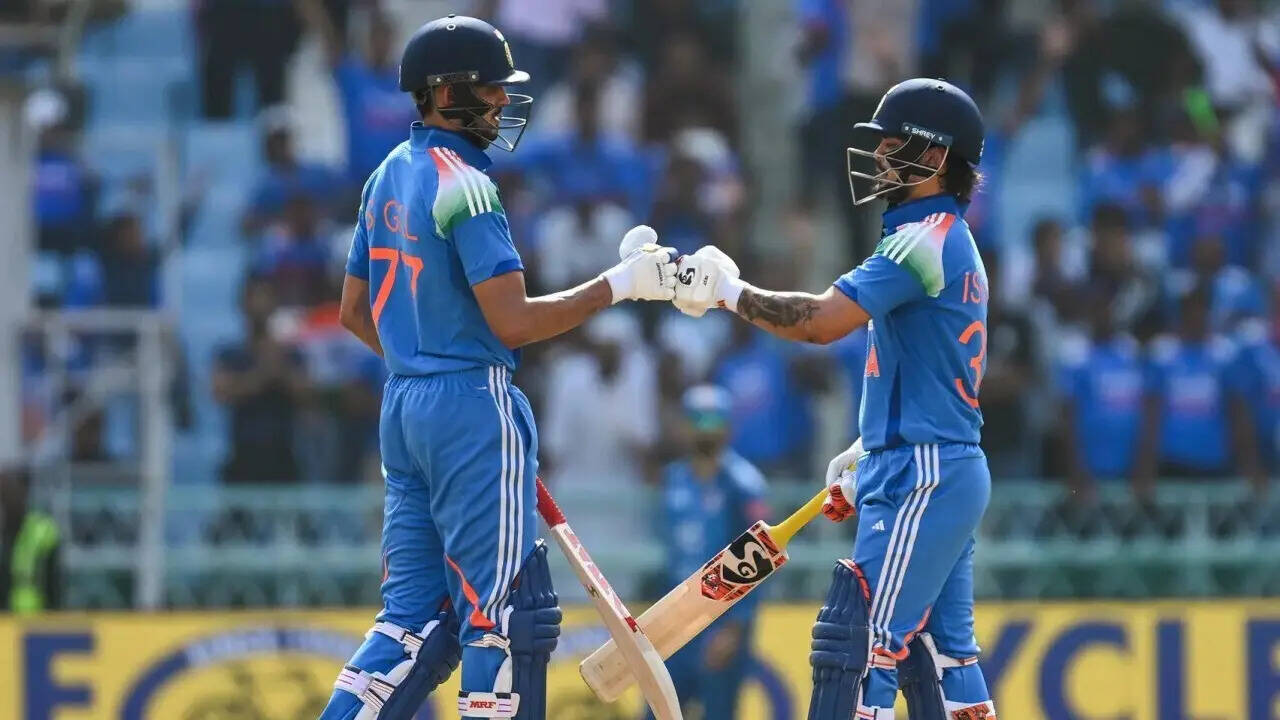
A grueling 224-run stand in the Lucknow swelter suggests that Gautam Gambhir’s tactical pivot toward left-right combinations is gaining serious momentum.
The mercury at the Ekana Stadium in Lucknow hovered stubbornly above 40 degrees Celsius, turning the pitch into a furnace that left even the fittest athletes visibly drained. Yet, amidst the relentless heat and the struggle for hydration, a tactical experiment unfolded that may define the next cycle of Indian cricket. The 224-run partnership between Shubman Gill and Ishan Kishan wasn’t just a response to a top-order collapse; it was a clinical demonstration of why head coach Gautam Gambhir has been pushing for a departure from the right-hander-heavy status quo that characterized India's 2023 ODI World Cup campaign.
For months, the management has navigated the monotony of an all-right-handed batting order. While the T20I setup has embraced the disruption offered by southpaws like Abhishek Sharma and Tilak Varma, the ODI unit remained stubbornly settled, often forcing unconventional promotions—like Axar Patel at No. 5—simply to break the rhythm of opposition bowlers. Following recent series losses to Australia and South Africa, the need for a structural change became impossible to ignore.
A Tactical Shift in Motion
The catalyst arrived with Virat Kohli’s injury, prompting a swift reshuffle. With Yashasvi Jaiswal opening alongside Rohit Sharma, Gill moved to first drop, and Kishan was slotted into the middle order. Though the experiment at the top faltered early in the second contest, the subsequent middle-order stability provided by Gill and Kishan proved that a left-right combination offers more than just theoretical balance. It forces captains to constantly adjust field placements and disrupts the length-lines of spin-heavy attacks.
The performance in Lucknow was comprehensive. Over 140 deliveries, the pair combined elegant strokeplay with aggressive running, often calling for fluids between overs and sporting ice packs to cope with the draining conditions. For Gill, the intent was clear: he was hunting for a double century, pushed by the physical toll of the innings but driven by the clear-eyed mandate from the team thinktank to maximize scoring opportunities.
The Bigger Picture: Why It Matters
This shift is not merely about personnel; it is a calculated blueprint for the 2027 ODI WC. As veteran observers and figures like Ravichandran Ashwin have noted, the transition period for senior stalwarts like Kohli and Sharma is no longer a distant theoretical discussion—it is a present-day reality. By integrating players like Kishan into the core batting lineup, India is attempting to inject the unpredictability that was missing in their previous World Cup campaigns.
The strategy is clear: break the opposition’s bowling rhythm early and often. While the reliance on right-handers has served India well in the past, the modern game demands a more fluid, multi-dimensional approach to batting. If the Lucknow display is any indication, the team management is ready to prioritize this hybrid model over the comfort of a set, homogenous order. Whether this blueprint survives the rigors of multi-year international cricket remains to be seen, but the intent to evolve is now firmly on the table.
Arjun Mehta reports on government, policy and Parliament for PoliticalPedia, in English and Hindi.