Beyond the Handshakes: Why the Modi-Trump Meeting at G7 Is a Litmus Test for Indian Diplomacy
Modi-Trump Meeting At G7: Strategic Autonomy Put To The Test Amid Growing Tensions | #TheHardFacts
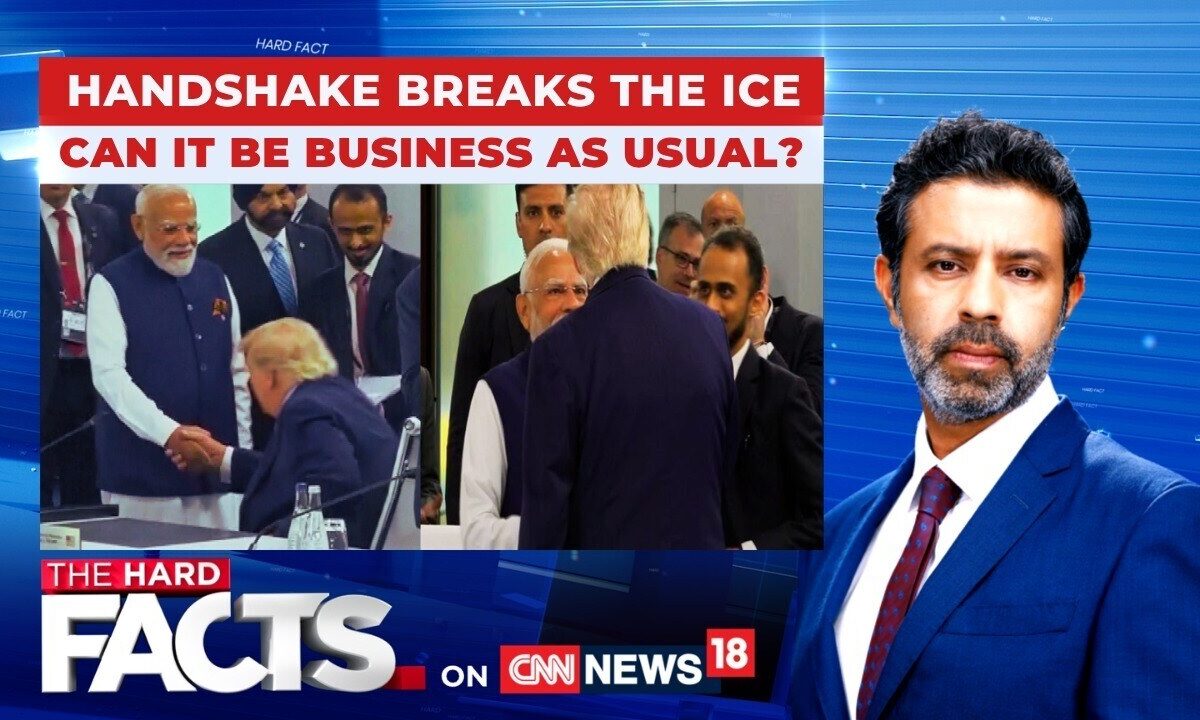
As global headwinds gather, the high-stakes encounter in Evian signals a shift from personal chemistry to the cold, hard realities of trade and maritime security.
The atmosphere in Evian this week is a far cry from the boisterous rallies of the past. As the G7 summit kicks off, the much-anticipated Modi-Trump meeting at the sidelines carries a weight that transcends mere optics. While previous interactions between the two leaders were defined by visible warmth and a deliberate focus on personal rapport, this engagement is shadowed by a more pragmatic, if not strained, reality. For New Delhi, the strategic autonomy put to the test amid growing tensions is no longer a theoretical exercise; it is the central challenge of its current foreign policy.
The agenda is packed with friction points that have simmered for months. Trade disputes, specifically those linked to U.S. tariff policies, have cast a pall over the bilateral relationship, challenging the idea that personal chemistry alone can resolve structural economic disagreements. Simultaneously, the escalation of maritime tensions in the Gulf adds a layer of geopolitical urgency to the discussion. Washington is looking for alignment, but New Delhi remains cautious, balancing its long-standing commitment to an independent path with the need to secure its interests in a volatile global theatre.
The Shift in Dynamics
The narrative surrounding the Modi-Trump meeting has evolved from one of mutual admiration to one of transactional necessity. While analysts at Chatham House suggest that the relationship is robust enough to endure the current strain of protectionist tariffs, the immediate environment is undeniably fragile. India’s decision to engage in parallel high-level talks—such as those with Emmanuel Macron—highlights a clear directive from South Block: keep options open and diversify partnerships.
India is not just watching the U.S.; it is actively managing a landscape where regional stability is increasingly fragile. The trade disputes are symptomatic of a broader malaise in global relations where domestic economic pressures often clash with strategic alliances. Whether this interaction leads to a breakthrough in defense cooperation or merely reinforces the status quo remains to be seen.
Why it Matters: The Bigger Picture
This is a defining moment for Indian statecraft. By refusing to be drawn into a binary choice between major power blocs, New Delhi is testing whether it can maintain its strategic autonomy while engaging with an increasingly unpredictable Washington. The pattern here is clear: India is moving away from a reliance on the "personality-led" diplomacy of the last few years toward a more institutionalized, interest-based approach.
If New Delhi can successfully navigate these tensions without compromising its core national interests, it will signal a maturing of its global stature. However, the risk is that the U.S. may demand greater concessions in return for security guarantees in the Indian Ocean and beyond. For now, the world is watching to see if the Modi-Trump rapport can survive the transition from political theatre to the hard realities of global power dynamics. This is #TheHardFacts: the era of easy diplomatic wins is over.
Ananya Iyer covers global affairs with an Indian lens for PoliticalPedia.