Beyond the Cubicle: How India’s Digital Nomads Are Rewriting the Rules of Work
From office towers to open skies: How India's digital nomads are changing the way we work
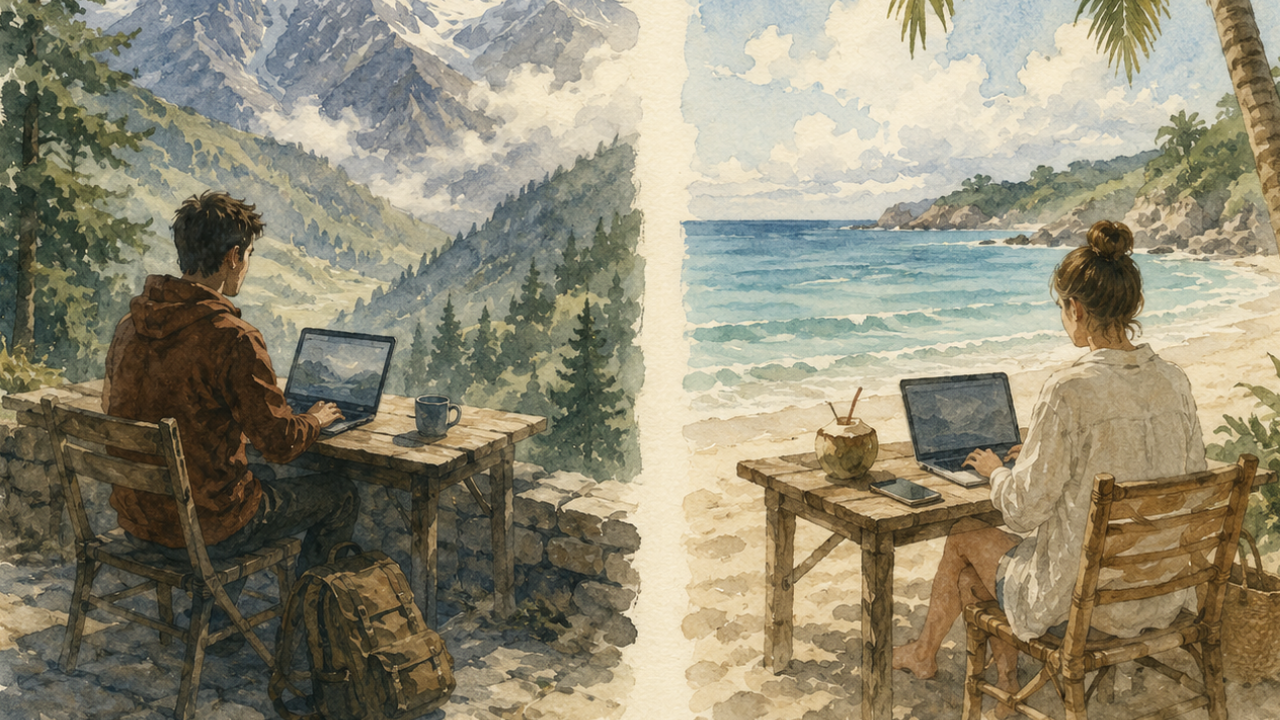
From the mist-covered hills of Sikkim to the beaches of Goa, a quiet migration is unfolding as 1.7 million professionals trade city commutes for a life of location independence.
For decades, the Indian dream was a one-way ticket to a metro city. Millions of young graduates packed their bags, leaving behind family homes to chase corporate promotions in the glass-and-steel towers of Delhi, Mumbai, and Bangalore. They swapped fresh air for smog and the rhythm of the seasons for the relentless, sterile glow of office cubicles. But that historic flow has reversed. A quiet, profound revolution is underway as a new generation of workers decides that professional success no longer requires a permanent urban address.
According to the State of Digital Nomads Report, India now ranks 11th globally, home to an estimated 1.7 million location-independent professionals. These workers, predominantly from the Gen Z and millennial cohorts, are leveraging high-speed internet to disconnect their earning power from geographic congestion. While the shift gained momentum during the pandemic, it has since solidified into a mainstream lifestyle choice. Today, you are just as likely to find a software engineer or a startup consultant hammering out a deadline from a mountain deck in Dharamshala as you are from a shared desk in a basement office.
The Infrastructure of Freedom
This migration is not merely a flight of fancy; it is backed by an evolving infrastructure. Across the country, from remote eco-stays in Yakten village to the surf-camps of Goa, a wave of co-working and co-living spaces has emerged to cater to this nomadic tribe. These hubs provide more than just Wi-Fi and adjustable desks; they offer a community. For the modern nomad, living for weeks or months in a single destination allows them to integrate into local life—picking up regional languages or joining pottery classes—while remaining firmly plugged into global markets.
Yet, this shift exposes a striking divide. While the movement is lauded for fostering mental well-being and democratizing opportunity, it remains heavily skewed by gender. Reports indicate that women are significantly underrepresented in this nomadic workforce, with safety concerns and social expectations acting as invisible barriers. While cities like Dharamshala, Bir, and Puducherry are becoming "Instagram-friendly" beacons for the remote-first worker, the path to a truly inclusive digital nomad culture remains unfinished.
The Bigger Picture: Why It Matters
This trend is more than a change in work habits; it is a structural adjustment of the Indian economy. As professionals move from hyper-urban hubs to smaller towns, they are essentially decentralizing economic growth. This reverse migration is effectively shrinking the rural-urban divide, bringing urban purchasing power and digital-first expectations into regions that were once considered "off the map."
For policymakers and businesses, the signal is clear: the traditional office-centric model is losing its monopoly on talent. The companies that will thrive in this new era are those that view digital connectivity as an enabler of productivity rather than a threat to oversight. As long as the internet remains the primary tether, the allure of the "office tower" will continue to fade, replaced by a preference for a balanced life that prioritizes sanity, peace, and the ability to work from anywhere.
Arjun Mehta reports on government, policy and Parliament for PoliticalPedia, in English and Hindi.