Beyond the Chopper: How Drones are Redefining Logistics on India’s Himalayan Frontier
How drones could transform logistics on India's Himalayan frontier
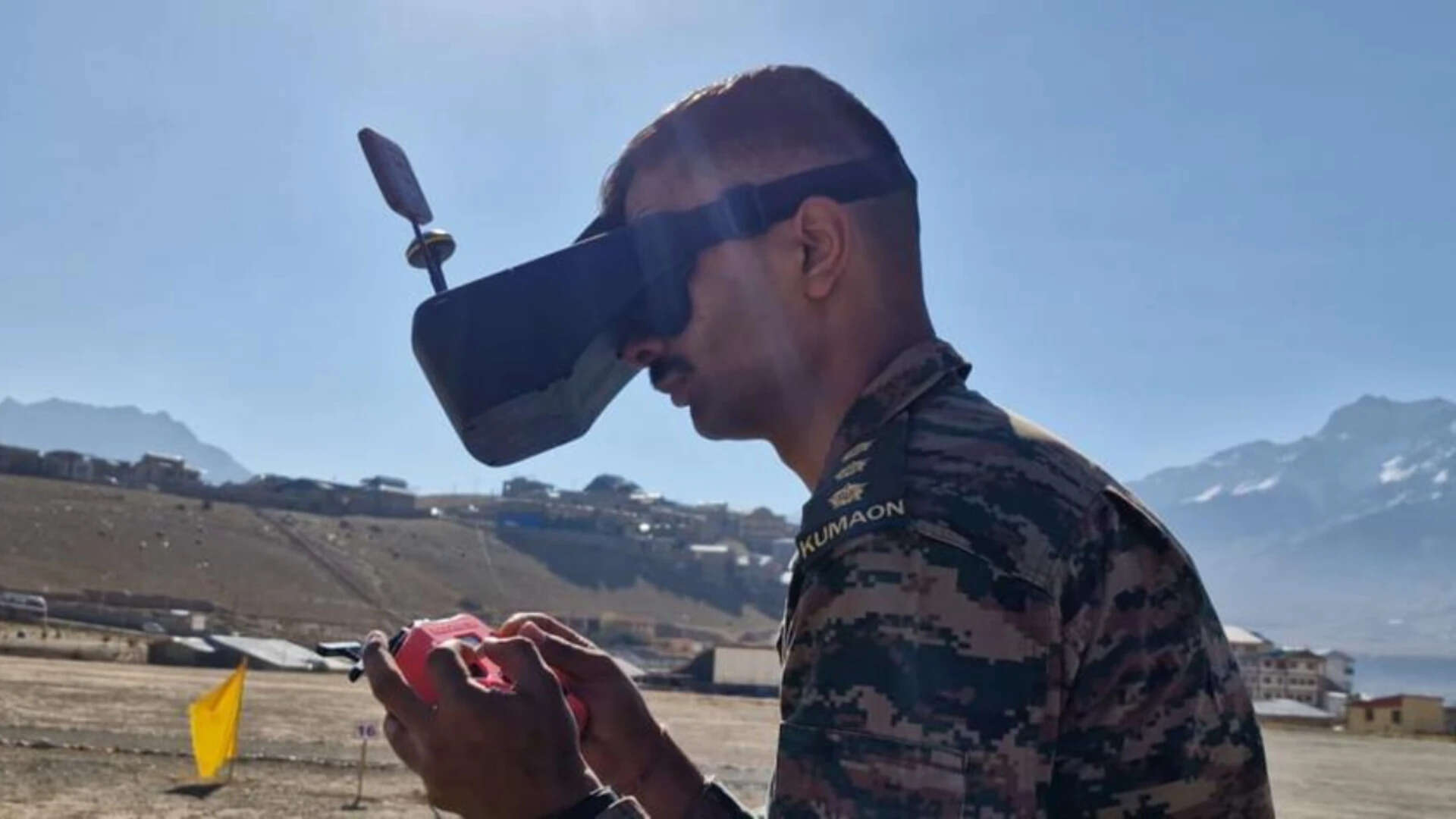
As tensions simmer along the LAC, the Indian Army is looking to the skies to solve the logistical nightmare of resupplying remote, high-altitude mountain outposts.
For decades, the Indian soldier’s lifeline in the Himalayas has been a precarious dance between aging Cheetah helicopters and the sheer grit of foot soldiers navigating treacherous, thin-aired terrain. From Ladakh to the heights of Sikkim and Arunachal Pradesh, the physical cost of maintaining a forward presence is immense. But as the geopolitical landscape in Asia grows more complex, the military is quietly pivoting. The new frontline isn't just about artillery; it’s about the silent, automated hum of logistics drones designed to operate where even the sturdiest choppers struggle to fly.
The operational requirement is precise: the Army needs platforms capable of hauling 20 to 40 kilograms of supplies at altitudes touching 18,000 feet. By replacing costly helicopter sorties—which are notoriously weather-dependent and subject to heavy mechanical wear—with these agile aerial platforms, the defence establishment is looking to secure a more resilient supply chain. Whether it’s emergency medical kits or vital rations, these drones are being built to endure the thin air and brutal winds that define our northern borders.
Indigenous Innovation Meets Mountain Warfare
The domestic industry has risen to this challenge with impressive speed. Bengaluru-based BonV Aero has developed the 'Air Hans', a drone engineered to handle a 20-kilogram payload at an operational ceiling of 16,500 feet. Meanwhile, industry veteran IdeaForge has been testing the 'Yeti', a platform designed for extreme conditions with a massive take-off weight capacity that can reach up to 6,500 metres in altitude. These indigenous efforts, spurred by initiatives like the HIM-DRONE-A-THON, signal a shift away from reliance on expensive, imported air assets.
This move is part of a broader, necessary evolution. While India’s postal network has already begun leveraging drone tech to optimize routes, the military application is far more critical. The security implications are clear: as China continues to bolster its high-altitude infrastructure—building airbases and rail lines that cut deep into the disputed Aksai Chin region—India’s ability to sustain its own defensive posture without overextending its limited aerial fleet is a strategic imperative.
Why it matters: The Bigger Picture
This transition is about more than just moving cargo; it’s about tactical autonomy. The Himalayas have always been a natural fortress, but they are also a logistical bottleneck. By decentralising supply chains, the Indian Army is reducing its vulnerability to the "two-front" threat scenario often discussed in security circles. If a conflict were to escalate, reliance on a few large, high-value helicopters creates a single point of failure. A swarm of smaller, cost-effective drones, however, is harder to disrupt and cheaper to replace.
The pattern is unmistakable. From healthcare delivery in remote villages to the harsh, wind-swept ridges of the Ladakh border, drone technology is proving to be a force multiplier. For India, mastering these systems is not just an exercise in technology adoption; it is a critical component of maintaining a credible deterrent in an increasingly contested Himalayan theatre. As these platforms move from prototypes to field-tested assets, the map of our northern defence strategy is being redrawn in the sky.
Ananya Iyer covers global affairs with an Indian lens for PoliticalPedia.