Bengaluru CM Ditches Convoy for Metro to Spare Commuters the ‘Zero-Traffic’ Chaos
Chief Minister travels by Metro to avoid Zero-Traffic arrangements in Bengaluru
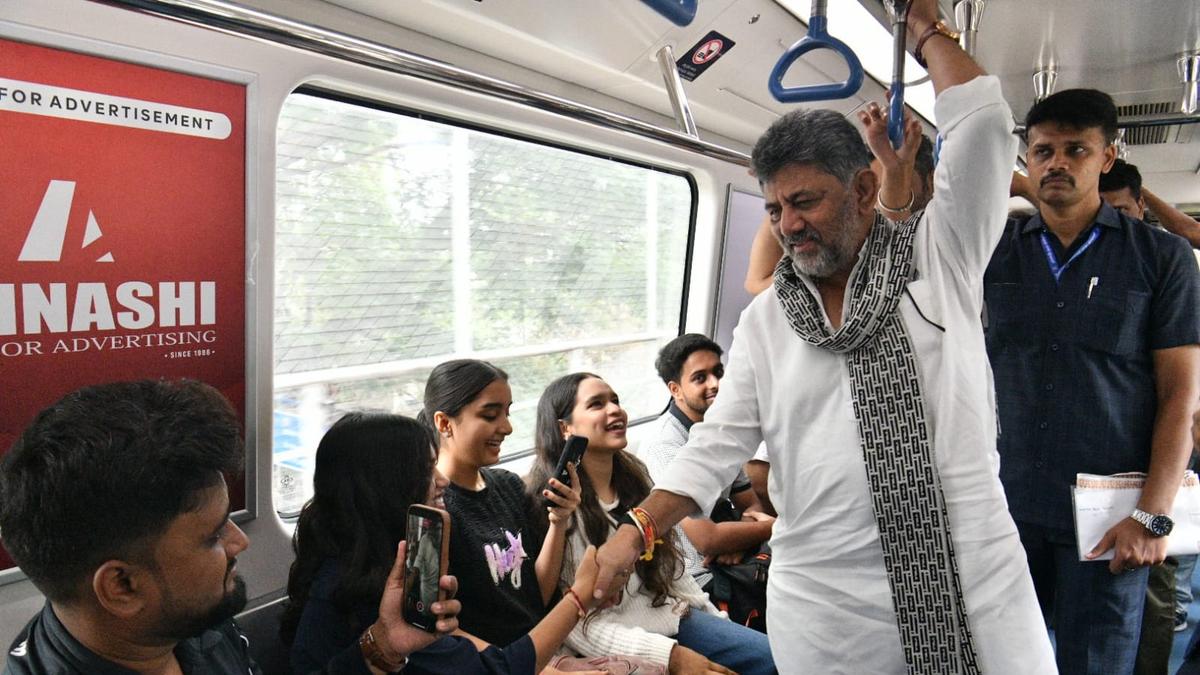
Karnataka Chief Minister D.K. Shivakumar opts for public transit to visit his Kanakapura home turf, signaling a potential shift in how the state handles VIP movement.
On Sunday morning, the usual heavy police deployment and flashing sirens that accompany a Chief Minister’s commute were notably absent from the streets of Bengaluru. Instead, D.K. Shivakumar stepped onto a Namma Metro train at Vidhana Soudha, opting to bypass the traditional "zero-traffic" protocol that has long been a source of friction between the state’s political elite and its gridlocked residents. The Chief Minister’s office stated that the move was a conscious decision to avoid disrupting public movement during his first visit to his Kanakapura constituency since taking the oath of office.
Inside the carriage, the scene was distinctly un-VIP. Shivakumar spent his commute interacting with fellow passengers, sharing pleasantries and navigating the line toward the Silk Institute station. Once he reached the terminus on Kanakapura Main Road, he completed the final leg of his journey by road. While the optics of a minister taking the metro are rarely just about convenience, the timing of this decision suggests a heightened sensitivity to the growing public resentment regarding VIP culture on the city's crumbling infrastructure.
The Breaking Point
This quiet commute follows a week of intense public backlash against the city’s rigid traffic management. Just days prior, a video went viral showing a frustrated man protesting at a junction near Wind Tunnel Junction, where ongoing underpass construction had already throttled traffic. The man, who claimed he was rushing his pregnant wife to a hospital, was forced to a standstill to make way for Governor Thaawarchand Gehlot’s convoy. The incident ignited a firestorm on social media, with citizens questioning why VIP movement should take precedence over emergencies or the daily struggles of the working class.
Why it matters
The ripple effect of this outrage has reached the corridors of power. New Home Minister Priyank Kharge, tasked with managing these logistical headaches, convened his first meeting with IPS officers on June 5 to address the outcry. The conversation signaled a departure from the status quo, with the administration exploring alternatives like synchronized signaling to ensure the Chief Minister or other dignitaries can travel without forcing the entire city to a halt.
For Bengaluru, this is a delicate balancing act. The city is no stranger to traffic curbs, which are routinely implemented for high-profile events ranging from New Year’s celebrations to Vande Bharat inaugurations. However, as the metro network expands—highlighted by the recent launch of the long-awaited Yellow Line—the political class is beginning to realize that the sight of a stationary, frustrated public is no longer a sustainable cost for a smooth motorcade. Whether this ride on the Namma Metro marks a permanent change in protocol or a one-off attempt at image management remains to be seen, but the pressure to reform the "zero-traffic" policy is clearly mounting.
Arjun Mehta reports on government, policy and Parliament for PoliticalPedia, in English and Hindi.