Balancing the Pump: Hardeep Puri on India’s High-Stakes Energy Diplomacy
EXCLUSIVE: 'Protecting Consumers PM Modi’s Top Priority': Hardeep Puri On Navigating Energy Crisis
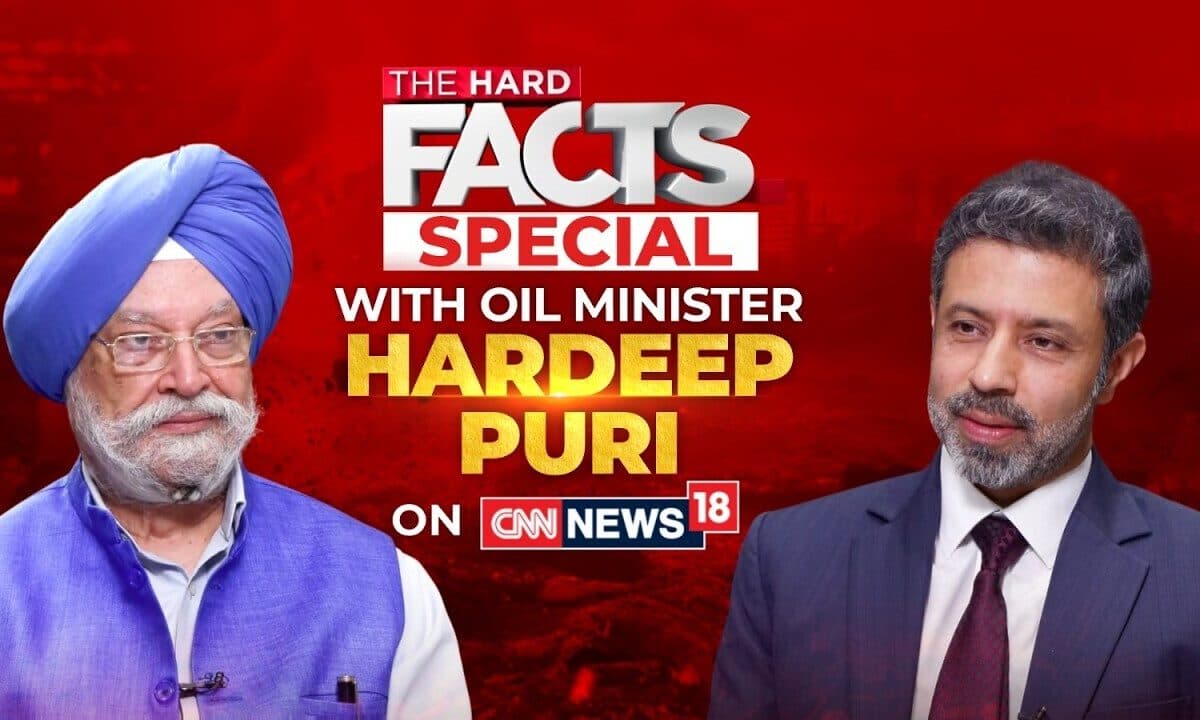
As global markets reel from geopolitical volatility, Union Minister Hardeep Singh Puri asserts that shielding the Indian consumer remains the government's primary mandate.
In the corridors of power, few things are as politically sensitive as the price of fuel at the pump. With global supply chains stretched thin by the ongoing Iran conflict and regional instability, Union Petroleum Minister Hardeep Singh Puri has sought to frame India’s recent energy strategy as a calculated act of insulation. Speaking in a recent exclusive, Puri emphasized that "protecting consumers" is PM Modi’s top priority, arguing that the government has worked tirelessly to ensure that the domestic energy crisis remains manageable even when global prices fluctuate wildly.
The Reality of Retail Prices
Defending the government’s track record, the Minister pointed to a comparative reality that often gets lost in the noise of daily headlines. Despite the inflationary pressures caused by global turmoil, Puri noted that the cost of petrol in Delhi today is lower than it was four years ago. This narrative of relative stability is central to how the administration plans to handle the current energy crisis, positioning India as a resilient market that has successfully decoupled its local retail prices from the extreme volatility seen in other parts of the world.
The Russian Oil Question
A key pillar of India’s strategy has been its pragmatic stance on crude imports. Responding to international scrutiny, Puri clarified that India was never told not to purchase Russian oil, provided the transactions adhere to global frameworks. The government’s focus, he maintained, has been to secure energy at competitive rates while avoiding any breach of sanctions regarding specific crude sources. By keeping the supply lines open, New Delhi has managed to buffer its economy against the shocks that have pushed other nations into energy poverty.
Why it matters
The bigger picture here is about the tightrope walk between geopolitical alignment and domestic welfare. For a country that imports the vast majority of its crude requirements, a surge in global oil prices is not just an economic headache—it is a potential election-year crisis. By focusing on consumer protection, the administration is effectively using the energy sector as a tool for social stability. However, the reliance on volatile global markets means this "cushion" is only as strong as the next geopolitical flare-up. As long as supply lines remain disrupted by regional wars, the government will likely continue to face a persistent challenge: balancing its global diplomatic standing with the need to keep the Indian consumer shielded from the fallout.
Beyond the Oil Fields
While the energy debate dominates the headlines, the broader national discourse remains fractured. From the tragic fallout of mining disasters abroad that prompted a rare moment of sympathy from the Prime Minister to the ongoing domestic anxieties—such as the severe smog blanketing the capital and security alerts at airports—the government’s focus is clearly split between international crisis management and local governance. Whether these multi-pronged strategies succeed will be the true test for the administration in the coming months.
Features Desk at PoliticalPedia covers culture, tech & life for an Indian audience in English and Hindi.