As Mumbai Rains Intensify, Vikhroli Wall Collapse Highlights Infrastructure Vulnerabilities
Mumbai Rains: Wall, Adjacent To Residential Building, Collapses In Vikhroli After Heavy Overnight Showers
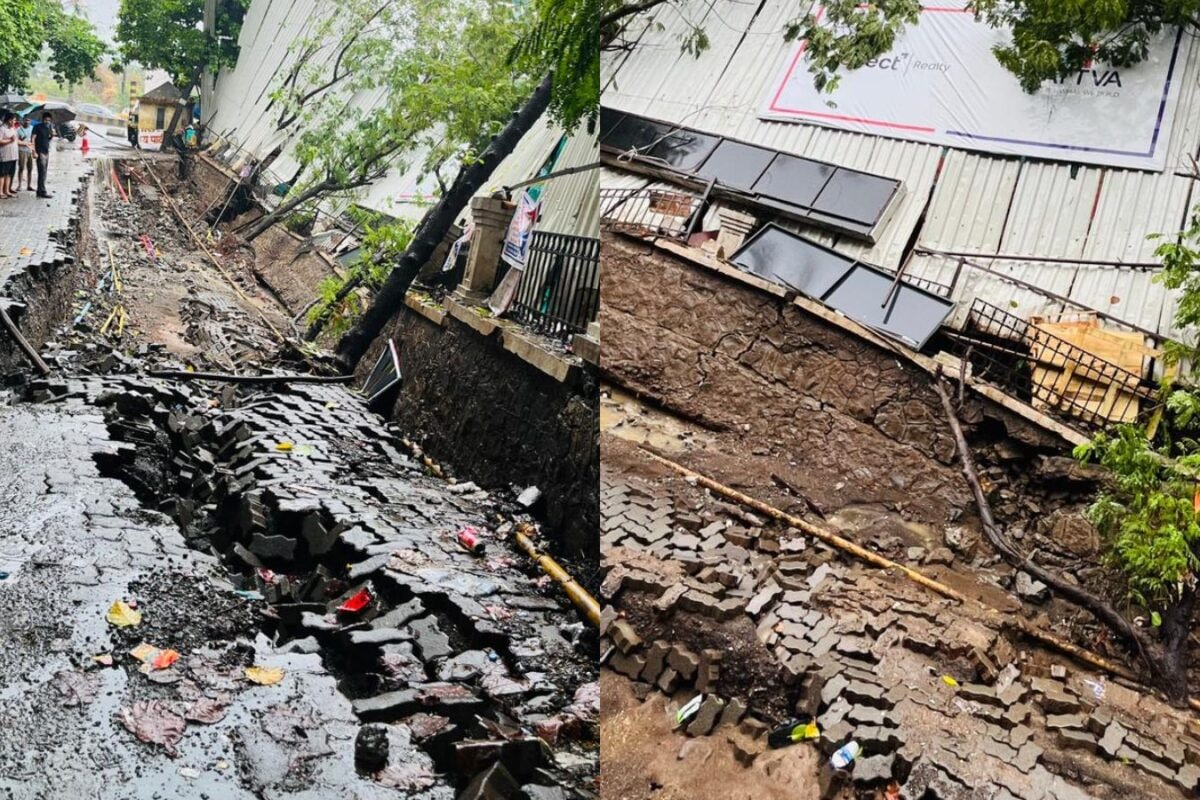
A retaining wall gave way in Vikhroli after heavy overnight showers, serving as a stark reminder of the city's fragile preparedness as the southwest monsoon gathers steam.
The morning commute for thousands in Mumbai began under a slate-grey sky, with the city bracing for the reality of the advancing southwest monsoon. In Vikhroli West, the night’s relentless downpour claimed its first major structural casualty: a retaining wall adjacent to the Sunheights residential building collapsed. While early reports indicate that no injuries occurred, the sight of debris spilling onto the road near a high-density living complex has once again set off alarm bells for local residents.
The India Meteorological Department (IMD) initially issued a red alert for Mumbai and Palghar at 4:00 am, warning of high-velocity winds reaching up to 60 kmph and intense, sustained rainfall. By 7:00 am, the warning was downgraded to an orange alert, though the forecast for Thane, Raigad, and Sindhudurg remains grim. Despite the volatile mumbai rains weather, the city’s lifelines—suburban local trains and BEST buses—largely defied the forecast, maintaining their schedules through the early hours.
A Pattern of Precariousness
This latest incident—a wall, adjacent to a residential building, collapses in vikhroli after heavy overnight showers—is rarely an isolated event in the city’s monsoon calendar. While this specific collapse caused no casualties, the broader trend across Maharashtra is far more concerning. Reports are emerging of multiple rain-related fatalities across the state, prompting the Chief Minister to convene a high-level emergency meeting to assess the city's disaster response readiness.
The Bigger Picture
Why does this matter? The Vikhroli collapse is a symptom of a larger, systemic tension between Mumbai’s rapid vertical growth and its aging, often strained infrastructure. Every year, as the mumbai rains intensify, we see a recurring cycle: heavy rainfall exposes the limitations of retaining walls, slopes, and drainage systems that were not built to handle the increasing frequency of extreme weather events.
It is easy to dismiss these events as "acts of nature," but the pattern suggests otherwise. As climate volatility becomes the new normal, the margin for error for structural maintenance shrinks. The resilience of a city of this size shouldn't rely on the hope that walls will hold; it requires proactive auditing of urban slopes and high-risk zones before the skies open up. For now, the city remains on edge, watching the clouds and waiting to see if the infrastructure can withstand the next round of the monsoon’s fury.
Kabir Sharma writes on culture, technology and everyday life for PoliticalPedia.