All 24 Indian crew rescued from tanker set ablaze off Oman after US strike
All 24 Indian crew rescued from tanker set ablaze off Oman after US strike
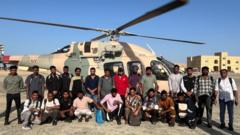
The operation concludes a harrowing ordeal for Indian seafarers caught in the escalating volatility of the Gulf’s critical maritime corridors.
For the 24 Indian sailors aboard the MT Marivex, a routine voyage turned into a desperate fight for survival when their vessel was struck by US forces off the coast of Oman. The unladen oil tanker, which had been under US scrutiny for alleged links to Iran, became the latest casualty in a volatile game of brinkmanship playing out across the Gulf. As flames engulfed the engineering and steering spaces of the Palau-flagged ship, the crew sent out frantic distress signals, fearing the vessel would succumb to the sea.
A narrow escape
The rescue, coordinated swiftly by Omani authorities, involved a helicopter operation that ferried the entire Indian crew to safety on Masirah Island. Opesh Kumar Sharma from India’s ministry of ports, shipping and waterways confirmed the safe evacuation, noting that government agencies had been working in tandem to secure the sailors. While the sailors are safe, the incident has sent shockwaves through the maritime community. Both the All India Seafarers Union and the Forward Seamen's Union of India have demanded robust support for the return of the crew, highlighting the increasing peril faced by merchant mariners in these troubled waters.
The trigger: US enforcement
The chaos followed a tactical move by US Central Command, which stated that an F/A-18 Super Hornet from the USS Abraham Lincoln fired a precision munition into the tanker. According to the US military, the strike was a direct response to the vessel’s attempt to sail to an Iranian port, an action deemed a violation of the ongoing blockade. By disabling the ship's steering and engineering systems, US forces effectively forced the vessel to a halt, yet the resulting fire left the Indian crew—who had no hand in the ship’s routing decisions—directly in the line of fire.
The bigger picture: A choke point on edge
Why does this matter? This incident is not an isolated mishap; it is a symptom of a deepening regional security crisis. The Gulf and the Strait of Hormuz have become the world’s most dangerous maritime bottlenecks. With Iran, the US, and regional powers locked in a cycle of sanctions, blockade enforcement, and military posturing, commercial shipping is increasingly being treated as a strategic pawn.
When global powers clash, it is often the merchant fleet that bears the brunt of the instability. For India, which relies heavily on these waters for energy security and maritime trade, the safety of its seafarers has become a pressing diplomatic and humanitarian priority. As tensions continue to spike, the risk to Indian crews—who make up a massive percentage of the global merchant navy—remains a precarious reality. The "blockade" logic, while intended to squeeze Iran, is creating a theater of war where civilian vessels are caught in the crossfire, turning vital shipping lanes into a precarious front line.
National Affairs Desk at PoliticalPedia covers government & policy for an Indian audience in English and Hindi.