After Days of Scorching Humidity, Heavy Rain Lashes Parts of Delhi, NCR and Noida
Heavy Rain Lashes Parts Of Delhi-NCR, Noida; Brings Relief From Sweltering Heat
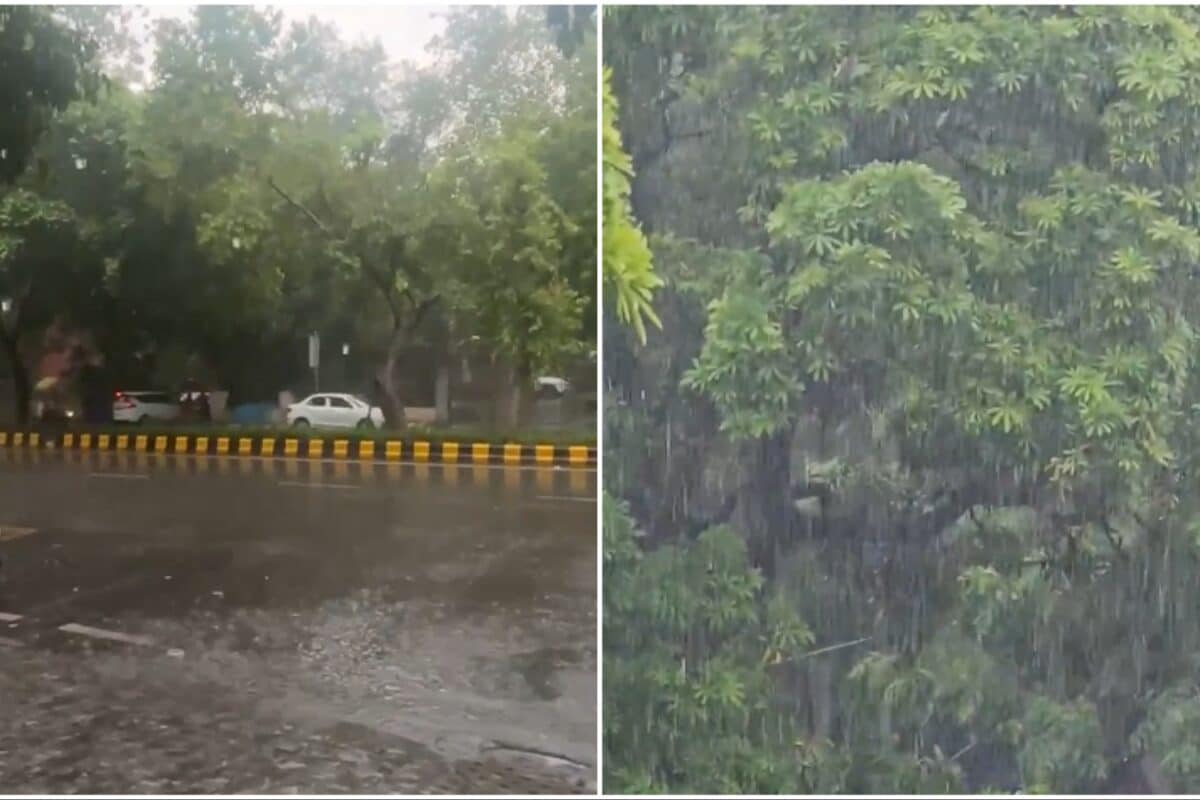
As the monsoon active spell intensifies, a long-awaited downpour has finally broken the oppressive heatwave across the National Capital Region.
The sky over the capital turned a dramatic shade of charcoal on Tuesday, bringing a sharp, welcome shift in the weather. For residents who have been battling stifling humidity and unrelenting temperatures over the past few days, the sudden arrival of heavy rain was a visceral relief. From the bustling streets of Noida to the various pockets of Delhi-NCR, the downpour—often accompanied by gusty winds and thunderstorms—has finally tempered the heat that had made even short commutes a struggle.
The India Meteorological Department (IMD) has been tracking the system closely, placing the capital under a yellow alert while warning that the wet spell is likely to persist throughout the week. While the cooling effect is immediate, the intensity of the showers has brought the usual urban challenges; reports of waterlogging and traffic snarls have emerged across several arterial roads, prompting airlines to issue advisories for passengers to plan their travel to the airport with extra time in hand.
Beyond the Rain: The Urban Impact
While the weather has turned pleasant, the infrastructure of the National Capital Region is, as always, under the spotlight. Beyond the immediate respite from the sweltering heat, the reality of the monsoon in a concrete-heavy landscape is playing out in real-time. In some areas, the sheer volume of precipitation has overwhelmed drainage systems, leading to the predictable chaos on the roads that commuters in Delhi-NCR have come to associate with heavy rainfall.
With schools in parts of Noida opting to remain shut to ensure student safety, it is clear that the administration is operating in a state of high caution. This is not just a seasonal shower; it is a reminder of how quickly the weather can dictate the rhythm of life in a megacity.
Why it matters
The larger pattern here is the increasing volatility of our monsoon cycles. We are moving away from predictable, steady rain to short, high-intensity bursts that leave our city systems struggling to keep pace. While the relief from heat is genuine, the logistical disruption—from flight delays to gridlocked traffic—points to a persistent gap in urban planning. As climate patterns become more erratic, the "pleasant weather" we crave often comes at the cost of significant civic strain. Adapting to these sudden, heavy spells is no longer just about carrying an umbrella; it is about building a city that can breathe, and drain, when the clouds finally burst.
Ananya Iyer covers global affairs with an Indian lens for PoliticalPedia.