A Split-Second Tragedy: Why Bengaluru’s Infrastructure Needs More Than Just Maintenance
Video: Tree Branch Falls On Bengaluru Biker's Head While Riding Helmetless
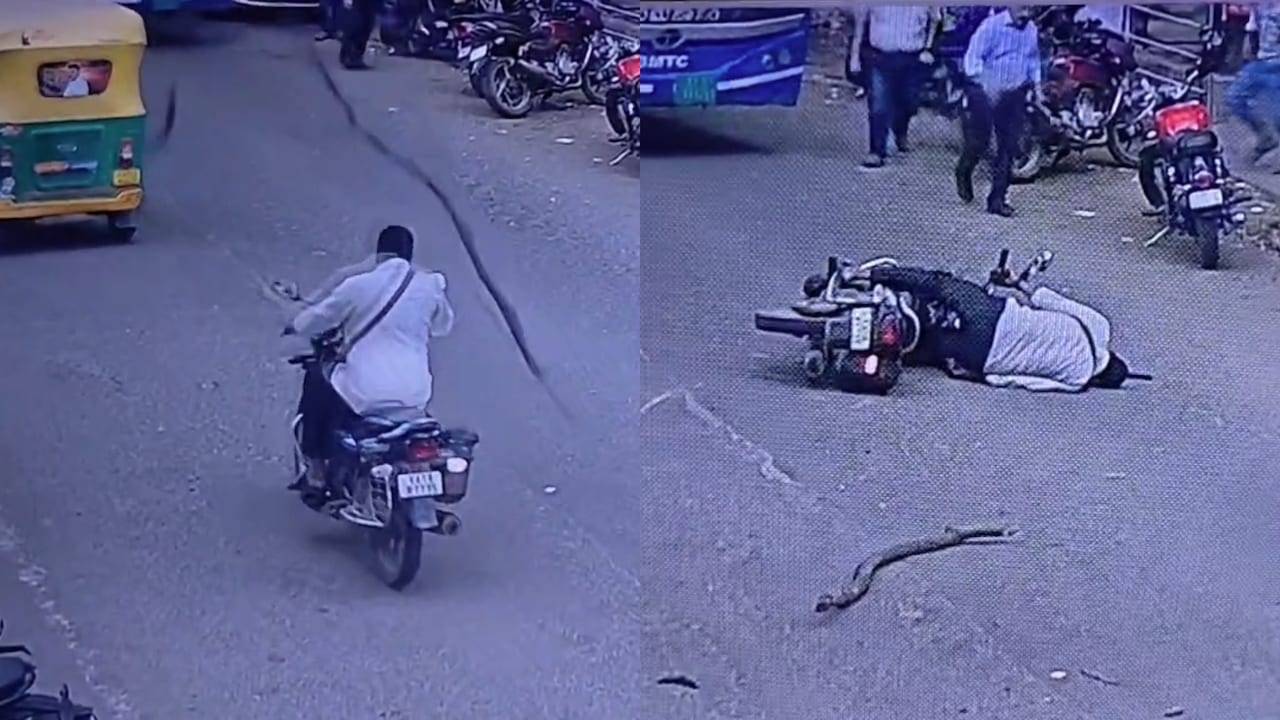
A viral video capturing a tree branch falling on a helmetless Bengaluru biker has sparked a fierce debate over urban safety and the accountability of civic authorities.
The footage is difficult to watch—a stark, silent reminder of how quickly an ordinary commute can turn into a life-altering crisis. In the video, which has circulated rapidly across social media, a biker is seen navigating a busy Bengaluru thoroughfare when a large tree branch suddenly snaps and strikes him directly on the head. Because the rider was helmetless, the impact of the falling wood was immediate and devastating, leaving him in critical condition.
For many in the city, the incident is not just a freak accident; it is a manifestation of a long-simmering frustration. Reports emerging from The Bengaluru Live indicate that the victim’s family has already come forward with allegations that local civic officials had been warned repeatedly about the precarious state of the trees in that specific area. When the warnings of citizens are met with bureaucratic inertia, the results often play out in the headlines as tragedy.
The Cost of Negligence
There is a grim pattern here that extends beyond the immediate shock of the footage. Whether it is the dangers faced by pavement dwellers in Delhi or the crumbling infrastructure in India’s IT capital, the underlying issue is a failure of urban stewardship. When a tree branch falls on a biker, the conversation naturally shifts to road safety, but it must also address the broader lack of systematic maintenance that turns public spaces into hazards.
While the rider’s decision to travel without a helmet undoubtedly exacerbated the severity of his injuries, blaming the victim ignores the systemic failures at play. A city’s infrastructure should be designed to handle the inevitable—the monsoons, the aging trees, and the density of traffic—rather than waiting for a viral clip to trigger a belated cleanup drive.
The Bigger Picture
This incident serves as a wake-up call for municipal corporations across the country. Road safety is a shared responsibility, but the state holds the primary burden of providing a safe environment. When trees are not trimmed, roads are left cratered, or safety warnings are ignored, the "accident" ceases to be an act of fate and becomes a consequence of systemic apathy.
As the victim fights for his life, the city is left to grapple with a difficult question: how many more videos of preventable tragedies will it take before "proactive maintenance" becomes the standard rather than an empty promise? Until then, commuters are left to navigate the streets, often hoping that the next branch stays where it belongs.
Kabir Sharma writes on culture, technology and everyday life for PoliticalPedia.