A Region Under Siege: The Mounting Struggle for Rights in Pakistan-Occupied Kashmir
Crackdown in Pakistan-Occupied Kashmir: A Struggle for Rights and Recognition | The Hard Facts
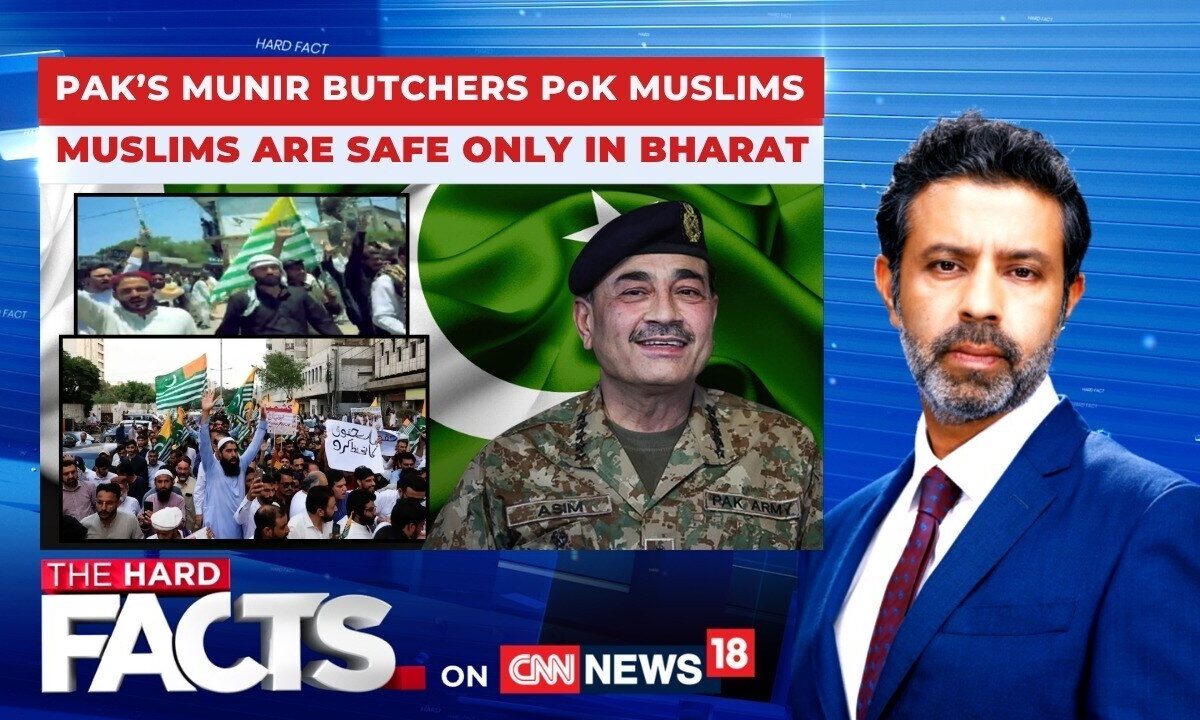
As the Joint Awami Action Committee faces a sweeping state crackdown, the residents of Pakistan-occupied Kashmir are demanding economic accountability and political dignity in a region now effectively sealed off from the world.
The atmosphere in Pakistan-occupied Kashmir has shifted from simmering discontent to a full-blown state of emergency. Since early June, the region has been caught in the grip of a harsh security operation. Following the government’s decision to label the Joint Awami Action Committee (JKJAAC)—a grassroots coalition of lawyers, traders, and students—as a “proscribed organization” under anti-terrorism laws, the territory has witnessed mass arrests, the deployment of paramilitary forces, and a near-total blackout of digital communication.
The Roots of the Unrest
The current turmoil is not merely a reaction to rising electricity tariffs or economic inflation. It is a fundamental challenge to the region’s political architecture. At the heart of the frustration is the AJK Legislative Assembly’s structure, particularly the 12 reserved refugee seats. Local activists argue these seats are used as conduits for Pakistan-based political parties to exert control over local governance, stifling genuine regional representation. When the AJK Supreme Court upheld the status of these seats, the JAAC’s movement for reform transformed into a broader, more urgent struggle for rights and recognition.
The state’s response, however, has been swift and severe. By invoking the Azad Jammu and Kashmir Anti-Terrorism Act, authorities have effectively criminalized dissent. The “sealing” of the region—which included shutting down mobile and internet signals and issuing advisories for outsiders and tourists to vacate—has left the local population isolated. Reports from the ground, though difficult to verify due to the blackout, describe a climate of fear where even journalists covering the protests have found themselves in the crosshairs of security agencies.
Why It Matters: The Bigger Picture
This crackdown exposes a deepening fracture in how the region is governed. While the administration maintains that these measures are necessary to uphold law and order, the tactical choice to use anti-terror legislation against a civil rights coalition signals an alarming intolerance for political discourse.
The contrast between the turmoil in this region and the relative development seen across the Line of Control in India’s Jammu and Kashmir has not been lost on observers. For Pakistan, the crisis poses a significant reputational risk, as the suppression of local voices contradicts the country’s long-standing narrative regarding the region. With elections looming in late July, the government’s reliance on force rather than negotiation suggests that the path to stability will remain elusive until the underlying grievances regarding autonomy and representation are addressed.
A Cycle of Repression
The situation is reminiscent of past escalations, yet the scale of this intervention is distinct. By cutting off the region from the rest of the world, authorities have ensured that the narrative remains tightly controlled. However, as the history of the Jammu and Kashmir dispute has shown, silencing the streets does not silence the underlying demand for accountability. Whether this marks a temporary suppression or a long-term shift toward more authoritarian control remains the defining question for the region’s future.
Rohan Gupta covers the economy, markets and companies for PoliticalPedia.