A Mercedes, A Locked Terrace, and a Wiped-Out Legacy: The Final Chapter of the Aggarwal Family
Tragic end for Aggarwal family: After losing 8 relatives in Delhi fire, 75-year-old dies at hospital
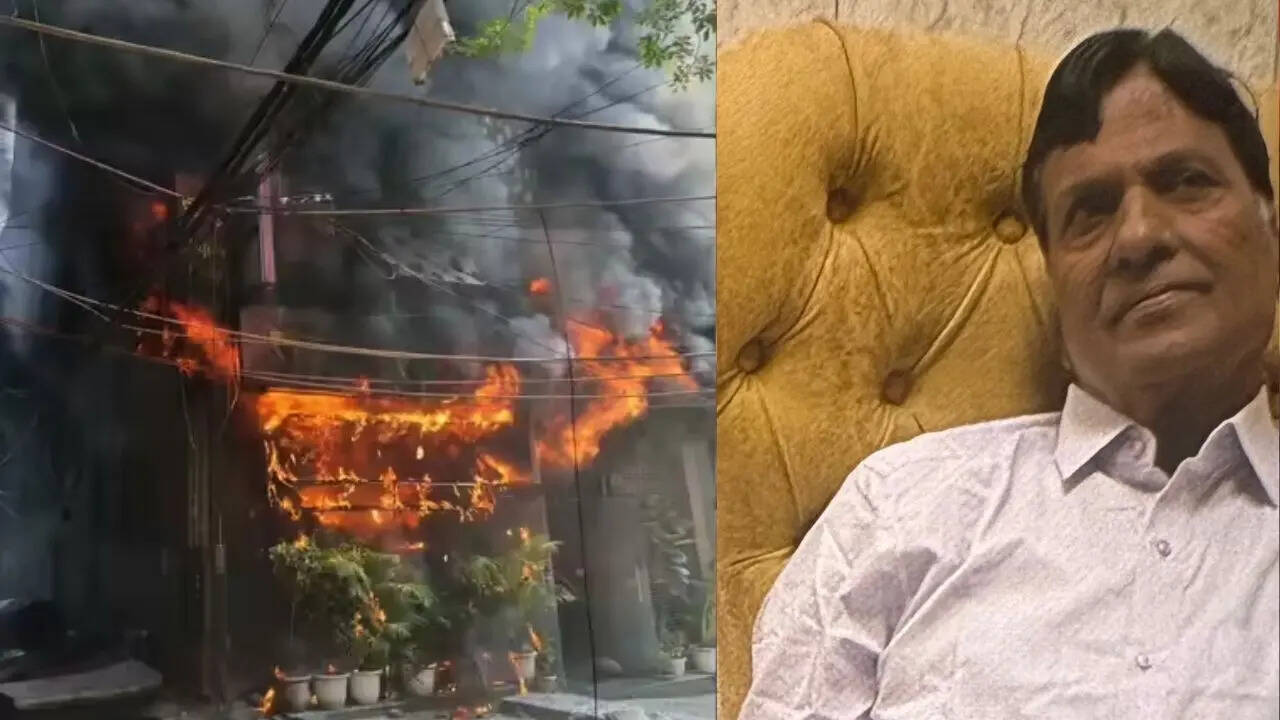
After losing eight relatives in the devastating Malviya Nagar hotel fire, 75-year-old Radhe Shyam Aggarwal has passed away, marking the complete end of his family line.
The sight of a lone, pristine Mercedes parked outside the charred skeleton of the Flourish Inn in Delhi has become the haunting, silent witness to a catastrophe that should never have happened. For the Aggarwal family from Gurgaon, what was supposed to be a short, supportive stay in the capital—centered around the medical care of 75-year-old Radhe Shyam Aggarwal—has instead resulted in total annihilation. On Tuesday, Radhe Shyam succumbed to his illness in the hospital, following his wife, son, daughter-in-law, and grandchildren into the afterlife.
The sequence of events is as harrowing as it is preventable. The family had converged on Delhi from Gurgaon, Bengaluru, and Rajasthan to rally around Radhe Shyam as he battled a lung infection at Max Hospital in Saket. To stay close to him, they checked into a hotel in Malviya Nagar. Within days, that temporary refuge turned into a death trap. Eight family members—including Premlata, the 70-year-old matriarch; Vivek, a CFO; his wife Tarjani, a former pageant winner; and their two daughters, Jivisha and Varya—perished in the blaze.
The Anatomy of a Man-Made Disaster
The scale of the Malviya Nagar fire, which has now claimed 22 lives including a foreign national, has laid bare the hollow promises of urban fire safety. Investigators probing the June 3 incident found a textbook case of criminal negligence: illegal construction, a total absence of fire safety systems, and a terrace door that was locked shut, effectively trapping guests inside as the smoke thickened.
For the grieving relatives left behind, the sorrow is now curdling into a demand for accountability. The family has openly called for "bulldozer action" against the hotel owner and the local officials who, for years, looked the other way while the property operated in blatant violation of the law. They are not merely asking for justice; they are questioning how a building with such systemic lapses was allowed to function as a commercial establishment in the heart of the national capital.
Why it matters
This tragedy is far from an isolated mishap; it is a recurring pattern in India’s rapidly urbanizing landscape. When commercial interests—often backed by systemic corruption or lax enforcement—override basic human safety, it is the common citizen who pays the ultimate price. The Aggarwal family’s loss serves as a grim reminder that "fire safety" in many Indian hotels is often just a label on a document, rarely reflected in the reality of locked exits and missing sprinklers. Until municipal bodies move from reactive investigation to proactive enforcement, the urban hospitality sector will remain a gamble where guests are unknowingly placing their lives on the line.
The death of Radhe Shyam Aggarwal, the sole survivor, closes a chapter on a family that was accomplished, close-knit, and full of promise. From a young BTech student to a CFO, the lives lost were not just statistics in a fire report—they were the fabric of a community now torn apart by a disaster that, by every account, was entirely avoidable.
Rohan Gupta covers the economy, markets and companies for PoliticalPedia.