24 Indian sailors rescued after U.S. missile strike on tanker off Oman coast
24 Indian sailors rescued from ship hit by U.S. missile
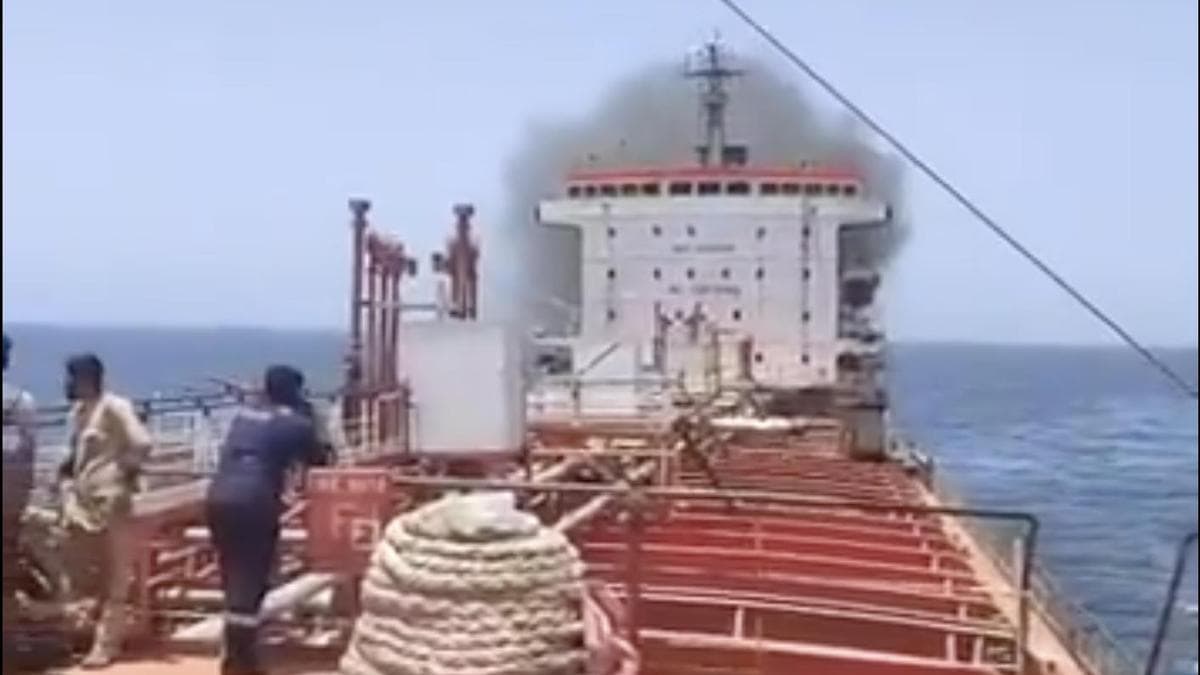
The Indian crew of the MT Marivex faced a harrowing escape on Monday after U.S. forces disabled the vessel in the Gulf of Oman, citing violations of the Iran blockade.
The panic in the audio messages sent to the Forward Seamen’s Union of India (FSUI) was unmistakable. "Fire on board. Vessel is sinking. U.S. Navy attacked with missile our engine room," the crew of the MT Marivex reported at 2 p.m. on Monday. For the 24 Indian seafarers trapped aboard the Palau-flagged tanker, a routine transit off the coast of Masirah, Oman, had suddenly turned into a life-or-death struggle. As the ship’s engine and steering spaces were shredded by a precision munition fired from an F/A-18 Super Hornet, the crew found themselves hemmed in by flames, with lifeboats on one side destroyed and the other side inaccessible.
The U.S. Central Command (Centcom) wasted little time confirming the operation. In a statement, they noted that the vessel, which they described as an unladen oil tanker under U.S. sanctions for its links to Iran, had been disabled after failing to comply with directives to stop its progress toward an Iranian port. While the U.S. maintains the strike was a targeted enforcement of an ongoing blockade, the optics for the Indian crew were starkly different. Distraught sailors sent video clips to FSUI general secretary Manoj Yadav, showing a U.S. warship nearby that, according to the crew, remained idle as their ship burned.
The Rescue Operation
The alarm reached Indian shores not through official military channels, but via a frantic relative of one of the sailors, who contacted the Maritime Rescue Coordination Centre (MRCC) in Mumbai. By 2.20 p.m. on Monday, the wheels of a multinational rescue effort began to turn. MRCC Mumbai quickly looped in the Oman Maritime Search and Rescue Centre (OMSC) to coordinate the mission. With the back-end of the tanker consumed by fire, the 24 Indian sailors were forced to retreat to the bow of the ship, where they were eventually airlifted to safety by helicopter and taken to Masirah Island.
Why it matters: The bigger picture
This incident highlights the precarious position of Indian merchant mariners caught in the crosshairs of escalating maritime tensions in the Middle East. As the regional conflict grinds on, shipping lanes near the Strait of Hormuz have become a high-stakes chessboard. For India, which relies heavily on these waters for energy security and trade, the risks are mounting. When global powers like the U.S. enforce sanctions through kinetic military action, the collateral damage often falls on the shoulders of the global seafaring workforce.
The incident also raises uncomfortable questions regarding communication protocols during such interdictions. While the U.S. claims the ship was warned, the gap between "disabling" a vessel and ensuring the safety of a civilian crew remains a significant point of concern for maritime unions. As shipping companies and crews continue to traverse these volatile waters, the demand for clearer safety corridors and more transparent coordination between warships and merchant vessels is likely to grow louder in New Delhi and beyond.
Business Desk at PoliticalPedia covers economy & markets for an Indian audience in English and Hindi.